
 En
En Cs
Cs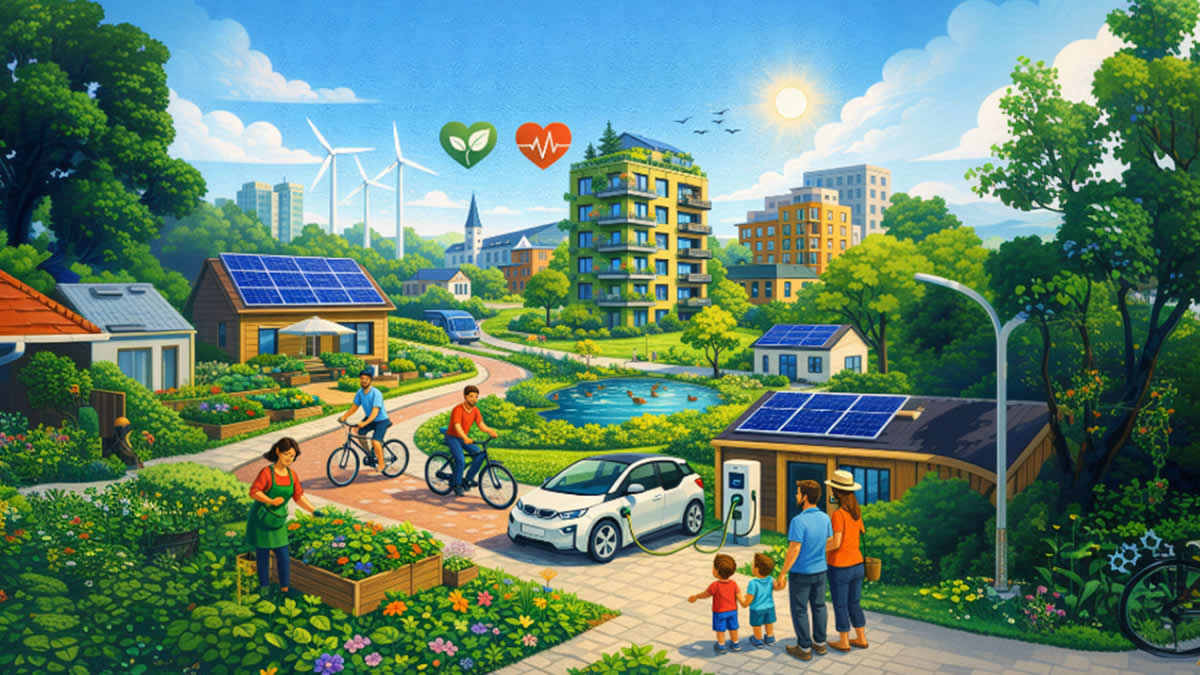
On 11 May 2026, the Council of the EU adopted a recommendation under the New European Bauhaus initiative (“NEB”), calling for the development of sustainable, inclusive and people‑centred neighbourhoods across Europe (“Recommendation”). It emphasises that future neighbourhood development should combine environmental sustainability, affordability, and quality of life, while fostering stronger community participation and innovation. The Recommendation is available at this link.
The Council outlined in the Recommendation the following eight key areas for action:
- Integrating the principles of sustainability, inclusivity, and aesthetics into all relevant policies and funding programmes;
- Building a circular and sustainable built environment, by prioritising renovation over demolition and the use of sustainable materials to minimise environmental impact;
- Actively engaging citizens in the transformation of their neighbourhoods, including using digital tools for an inclusive co-design;
- Harnessing the power of arts, culture and education by recognising and supporting the vital role of artists in driving innovation and the clean transition;
- Strengthening education and training programs within the EU and beyond to equip workers with the skills needed for sustainable construction and renovation;
- Raising awareness of the NEB and its benefits, including by supporting the NEB label (to be developed by the Commission) and the NEB community made up of almost 2000 local and international organisations;
- Improving access to funding through the NEB facility (under Horizon Europe) and attracting private investment for NEB projects; and
- Ensuring cross-sectoral and multilevel coordination and international collaboration, including support for Ukraine’s reconstruction.
For businesses, the Recommendation signals with regard to NEB increasing opportunities in sustainable construction, urban regeneration, and green infrastructure, alongside growing expectations for integrating ESG considerations into built environments. Over 700 relevant projects have already been supported, with EUR 1.4 billion devoted to the NEB under the 2021-2027 multiannual financial framework.