
 En
En Cs
Cs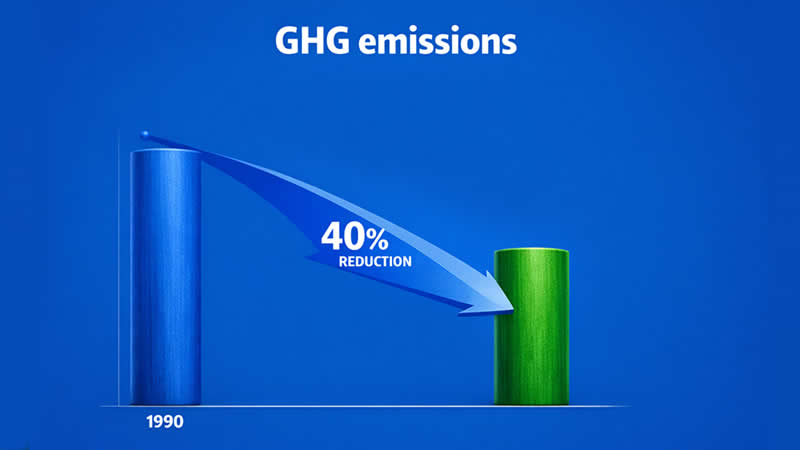
According to official data submitted by the EU to the UNFCCC and an analysis by the European Environmental Agency (“EEA”), greenhouse gas (“GHG”) emissions generated in the EU fell by a further 3% between 2023 and 2024. (“Analysis“). Also, the overall reduction is currently 40% below 1990 levels. The Analysis is available at this link.
The EEA in the Analysis alleges that the long-term decline in emissions is driven mainly by a higher share of renewables, a shift to lower-carbon fuels, improvements in energy efficiency, and structural changes in the economy across Member States. Significant absolute emissions declines have historically been associated with sectors such as electricity and heat generation and selected industries, underscoring the importance of the energy transition for the outcome.
At the same time, the EEA points in the Analysis to ongoing challenges: some areas (typically transport) may show a slower pace of improvement, which increases the importance of targeted policies and investments in clean solutions and infrastructure.