
 En
En Cs
Cs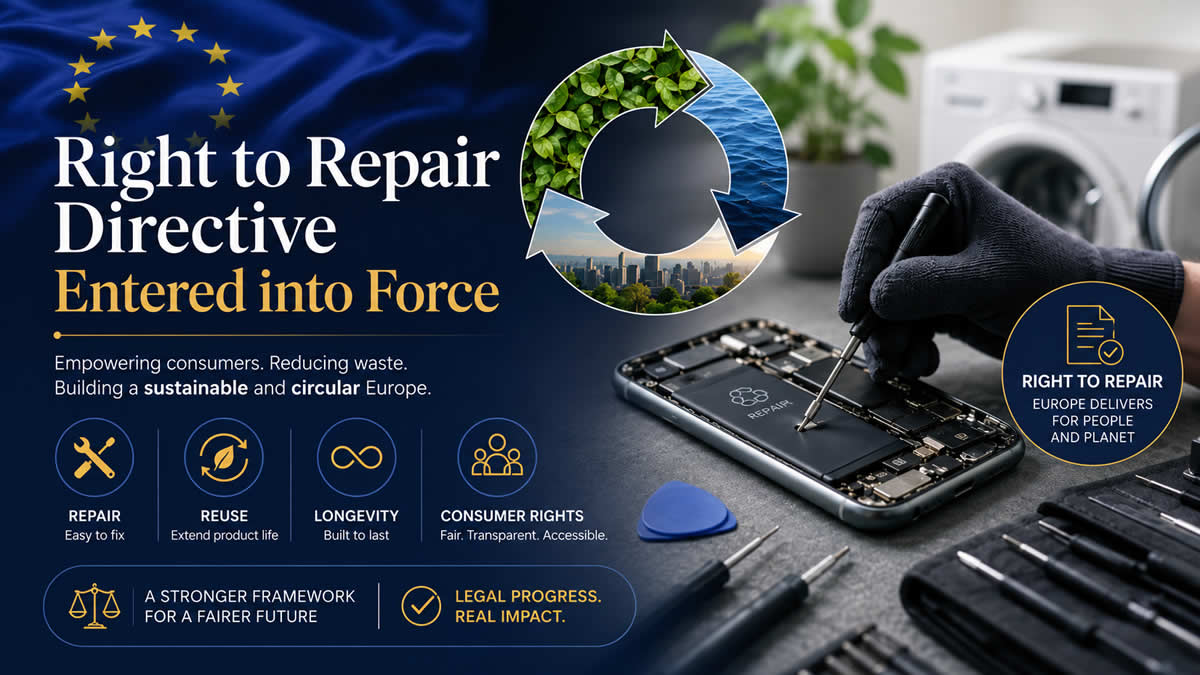
On 31 July 2026, the Right to Repair Directive (“RtRD“) became effective, marking a shift towards a system that favours repairing products instead of replacing them. The new rules aim to extend the lifecycle of products, reduce waste, and support more sustainable consumption. The text of RtRD is available at this link.
The Directive applies to household and electronic products, including items such as washing machines, vacuum cleaners, mobile phones, and tablets. Consumers now have the right to request repairs from manufacturers for products that are technically repairable under EU law. To encourage repairs, manufacturers must provide the service within a reasonable timeframe and price (or for free).
Consumer protections are further strengthened through an extension of the legal guarantee by at least 12 months when a consumer chooses repair instead of replacement during the liability period. Manufacturers are also required to provide easily accessible information about repair services and ensure access to spare parts at a reasonable price, making repairs a more practical option for consumers.
According to the European Commission, the new rules are expected to generate EUR 4.8 billion in growth and investment in the EU. To support consumers further, a European online repair platform is planned for 2027.