
 En
 Cs
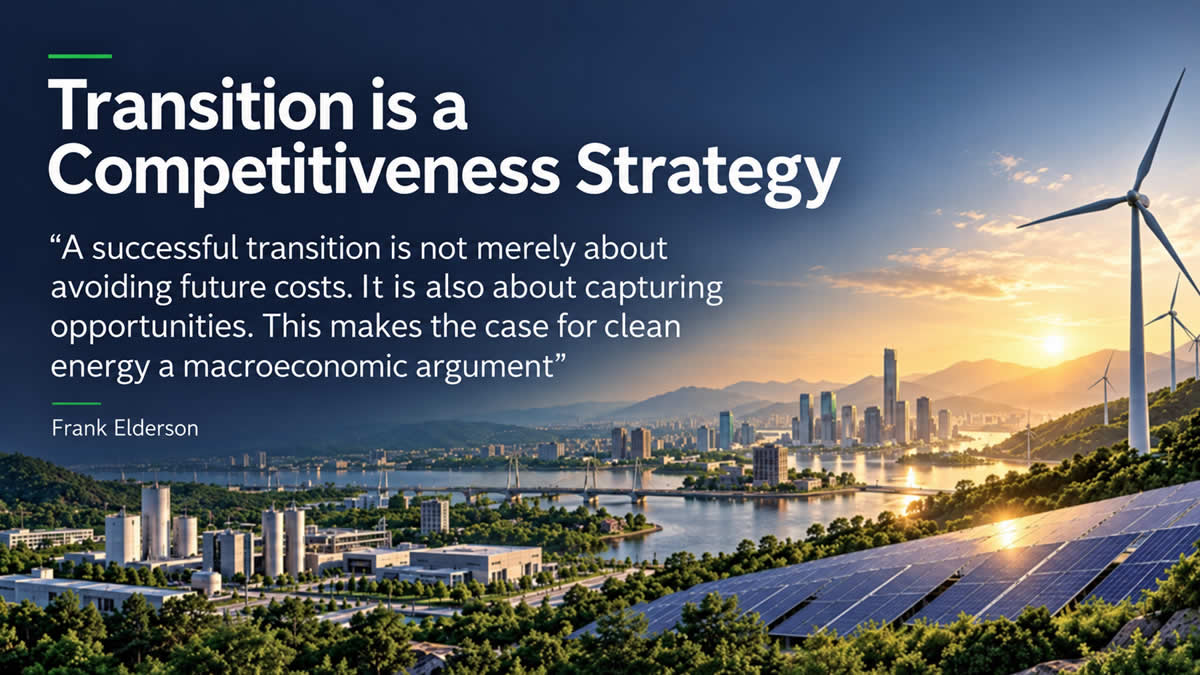
On 19 October 2026, Frank Elderson, Member of the Executive Board of the ECB, warned that climate change and nature degradation are already having material impacts on economic growth, inflation and financial stability. Drawing on the extreme weather events experienced across Europe in 2026, he argued that climate and nature risks have become a core economic challenge rather than a purely environmental issue.
According to the ECB, strengthening resilience will require both adaptation measures, such as climate-resilient infrastructure and improved water management, and mitigation efforts to address the root causes of climate change. Elderson stressed that action is needed now, as climate-related shocks are becoming more frequent and severe.
The speech also highlighted that the green transition is increasingly a competitiveness and energy security strategy. Greater electrification and the expansion of renewable energy can help reduce dependence on imported fossil fuels, improve resilience to external shocks and support long-term economic prosperity. However, Elderson noted that policy uncertainty and financing constraints continue to slow investment in the transition. He called for predictable policy frameworks, sustained investment and stronger international cooperation to accelerate progress and support a more resilient economy.
Frank Elderson, Member of the Executive Board of the ECB, concluded: “Building stronger resilience will require a proactive and comprehensive response that combines adaptation and mitigation with sustained investment, effective international cooperation and, above all, the resolve to act before risks fully materialise. When properly executed, investing in adaption and the transition is not merely about avoiding damage. It is an opportunity to build a more productive, more resilient and more competitive economy. A world of greater resilience is also a world of greater prosperity. The task now is to ensure that we move towards that future deliberately, credibly and with sufficient speed. Climate change and nature degradation may be a certainty in an uncertain world, but how we respond to them remains very much a matter of choice.”