
 En
En Cs
Cs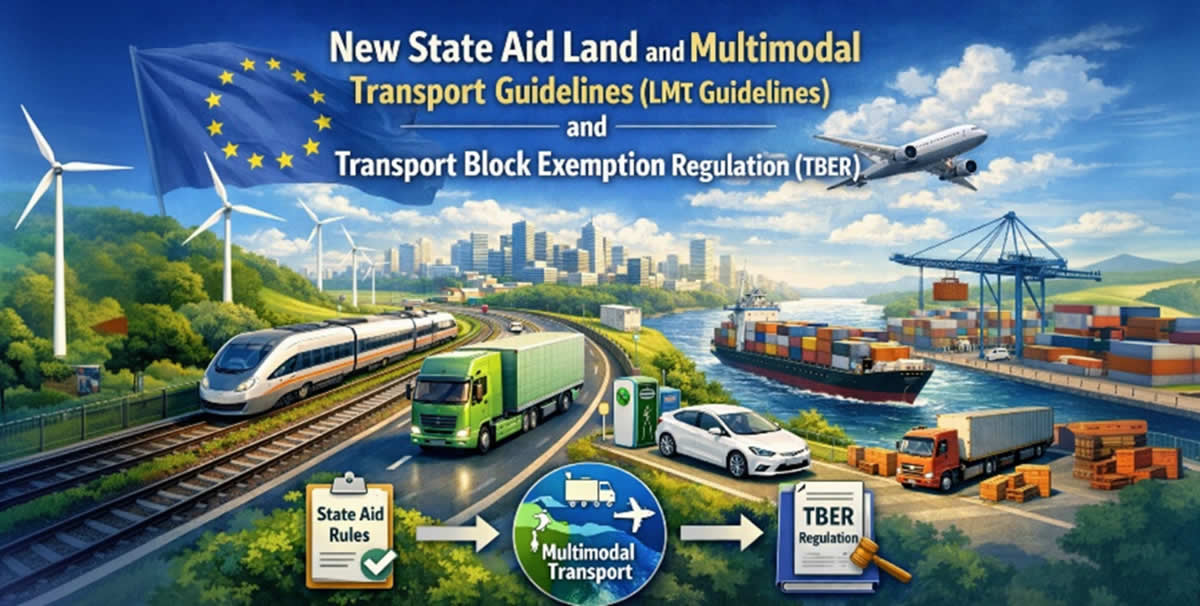
On 16 March 2026, the European Commission adopted today the State aid Land and Multimodal Transport Guidelines (“LMT Guidelines“) and the State aid Transport Block Exemption Regulation (“TBER“). These instruments support more sustainable transport modes for both passengers and freight and update the EU State aid framework for land and multimodal transport. They will enter into force on 30 March 2026 and will be in place until 31 December 2034. There is no end date for the LMT Guidelines. The new rules replace the 2008 Guidelines on State aid for railway undertakings. The LMT Guidelines and the TBER establish a coherent State aid framework covering a broad range of sustainable transport modes and aid measures, while maintaining safeguards to prevent undue distortions of competition. This new exemption framework constitutes a major simplification, enabling Member States to quickly provide aid where conditions are met. The LMT Guideilines and TBER are available at this link.
The LMT Guidelines set out the conditions under which State aid that has to be notified to the Commission for approval before it can be granted may be declared compatible with the internal market. The new Guidelines LMT include the following provisions:
- They cover all land transport modes that are more sustainable than road transport. These include rail, inland waterways and sustainable multimodal transport. When it comes to multimodal transport, at least one of the used transport modes has to be rail or inland waterways, or combine land transport with short sea shipping.
- They clarify the possibilities for several operating and investment aid measures, such as aid for the construction and upgrade of railway service and inland waterways facilities, aid to launch new commercial connections on rail and inland waterways, and they clarify the possibilities for aid in the form of reimbursement for the discharge of public service obligations in the rail freight sector.
- They introduce more flexible rules for aid measures that directly contribute to the green and digital transitions. This includes aid aimed at reducing the external costs of transport, as well as aid promoting interoperability, like aid for safer and more efficient operation across national rail systems. These provisions are designed to support a shift from road to more sustainable ways of transport, while ensuring that aid remains targeted and proportionate.
They introduce safeguards to support the entry and growth of new operators in sustainable land transport markets. They facilitate access to finance for SMEs, small- and mid-caps (SMCs) and new entrants to purchase rolling stock and inland waterway vessels, while preserving effective competition.
The TBER complements the Guidelines by exempting certain categories of aid in the rail, inland waterways and sustainable multimodal transport sectors from the requirement of prior notification to and approval by the Commission.