
 En
En Cs
Cs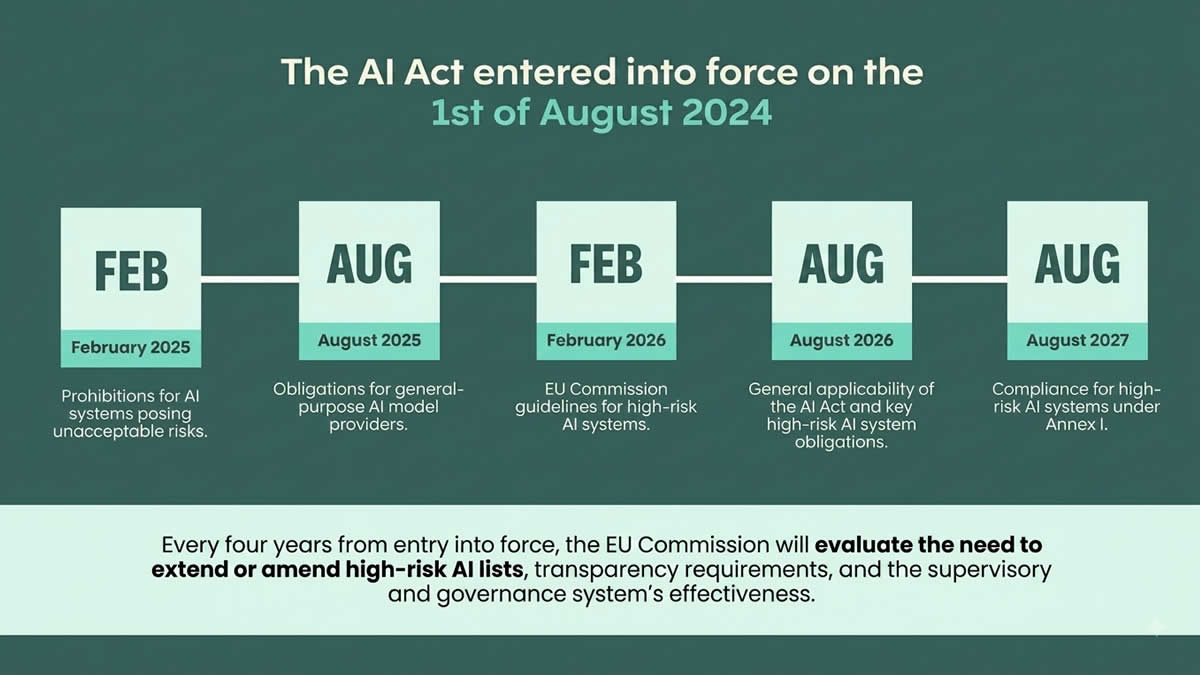
On 2 August 2026, new EU transparency rules for artificial intelligence (“AI“) systems under Regulation (EU) 2024/1689 of the European Parliament and of the Council of 13 June 2024 laying down harmonised rules on artificial intelligence (“AI Act“) took effect. They aim at helping people identify AI-generated content and recognise when they are interacting with AI. As AI capabilities continue to advance, it is becoming increasingly difficult to distinguish between authentic and AI-generated content, creating risks related to misinformation, manipulation, fraud, impersonation, and consumer deception. The new obligations are intended to support informed decision-making and strengthen protection against these risks. FAQs on the AI Act are available at this link.
Under the new rules, certain AI-generated or AI-manipulated content must be clearly labelled and include machine-readable markings. The requirements apply to content such as deepfakes, including images, audio, and videos that resemble real people, objects, places, or events. They also cover emotion recognition and biometric categorisation systems, as well as text published to inform the public on matters of public interest when it has not undergone human review or editorial control. The EU has developed a set of icons to support these transparency requirements.
The rules also require greater transparency when users interact directly with AI systems. People must be clearly informed when they are communicating with an AI system rather than a human, including when using tools such as chatbots, AI agents, or avatars. To support implementation, the European Commission has published guidelines explaining how providers and deployers of AI systems can demonstrate compliance with the new obligations.
Responsibility for enforcing the rules will be shared between national market surveillance authorities, the European AI Office, and the European Data Protection Supervisor in relevant cases. Non-compliance may result in fines of up to €15 million or 3% of global annual turnover for companies, with proportionality taken into account for SMEs and small mid-cap companies. The transparency requirements form part of the broader AI Act, which entered into force on 1 August 2024 and is being implemented in phases across the EU.